


Pool Ionizer vs. Salt Chlorinator
Which system offers lower chlorine use, better algae control, and easier pool maintenance?
Pool ionizers and salt chlorinators both automate part of pool care, but they do different jobs. A salt chlorinator converts dissolved salt into chlorine. A pool ionizer releases controlled levels of minerals into the circulating water to help control algae and other microorganisms.
You do not necessarily have to choose one or the other. A pool ionizer can be added to a saltwater pool, allowing the salt chlorinator to run at a lower output while the minerals handle much of the ongoing algae-control workload.
| Feature | Pool Ionizer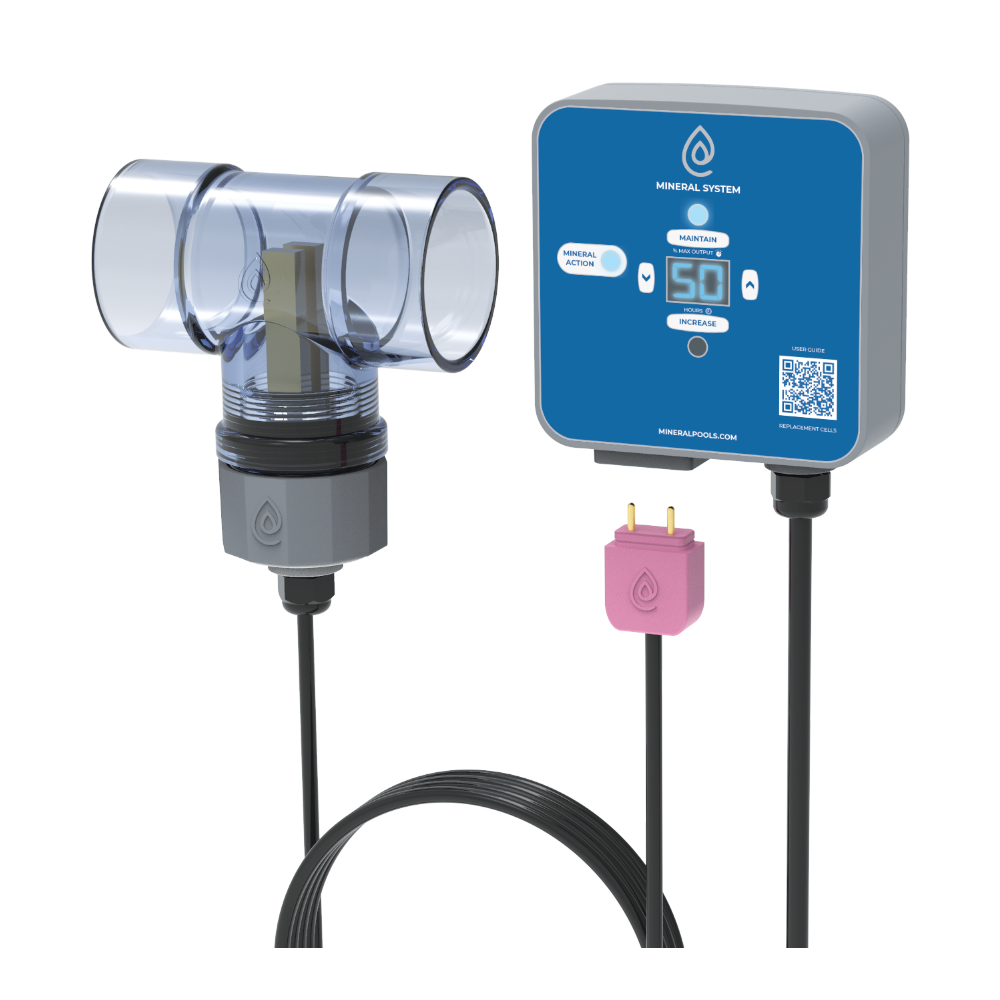 | Salt Chlorinator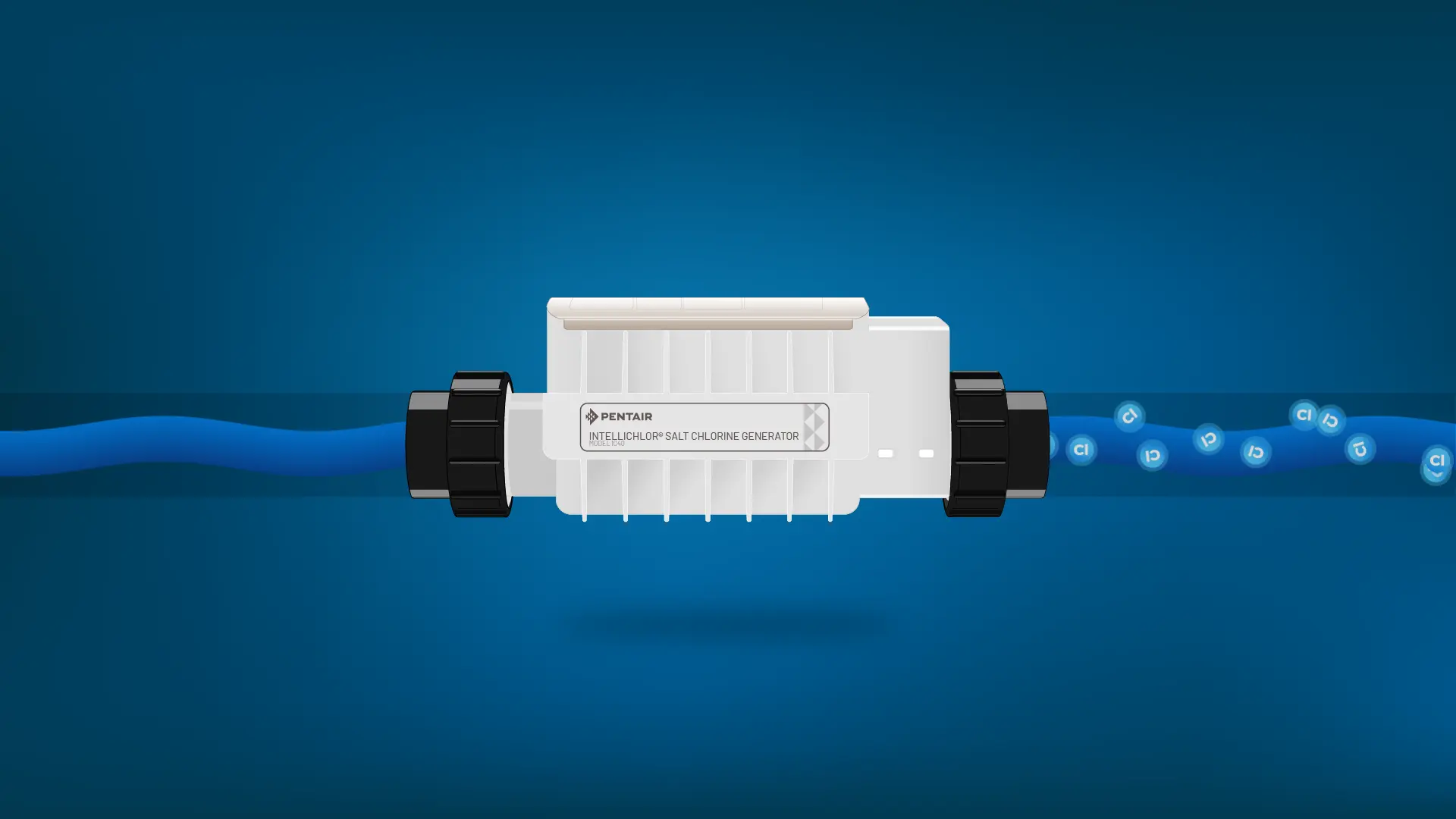 |
|---|---|---|
| How it works | Releases controlled levels of silver, copper, and zinc or copper and zinc minerals into circulating water. | Uses electrolysis to convert dissolved chloride from pool salt into chlorine. |
| Primary role | Provides continuous mineral-based algae control and supplemental antimicrobial protection. | Automatically produces chlorine, which sanitizes, oxidizes organic contaminants, and helps control algae. |
| What remains in the water | Minerals build to a measurable residual and remain active between filtration cycles. | The pool remains a chlorine pool with a salt concentration commonly measured in thousands of ppm. |
| Chlorine requirements | Works with a low chlorine or bromine residual. ClearBlue can reduce chlorine use by up to 80%; Mineral Lion by up to 60%. | Creates chlorine continuously when the pump and chlorinator are operating; output must be adjusted for weather and swimmer load. |
| Algae control | Copper-based minerals remain throughout the pool and specialize in ongoing algae prevention. | Chlorine controls algae when an adequate free-chlorine residual is consistently maintained. |
| Water feel and odor | Lower chlorine levels can mean less chlorine odor and gentler-feeling water. | Salt can make water feel softer than a manually chlorinated pool, but the system still produces chlorine. |
| Effect on pH | Mineral ionization itself has little direct effect on pH; normal water balancing is still required. | The electrolytic process can contribute to upward pH drift, so regular pH testing and acid adjustment may be needed. |
| Equipment considerations | Compact controller and mineral cell; keep copper and water balance in the recommended ranges. | Salt and elevated pH can increase scaling or corrosion risk if chemistry, bonding, and equipment compatibility are not managed correctly. |
| Installation | Installs inline, with flex hose, or over the top in supported applications. | Requires a compatible salt cell, power center or controller, plumbing, electrical work, and salt-compatible equipment. |
| Maintenance | Test copper, adjust output as needed, and periodically replace the self-cleaning mineral cell. | Test salt and free chlorine, adjust output, inspect and clean scale from the cell as directed, and replace the cell when depleted. |
| Upfront cost | ClearBlue systems currently range from $699.99–$899.99; Mineral Lion systems from $399.99–$599.99. | A Pentair IntelliChlor LT25 system for pools up to 25,000 gallons is currently $1,948 for the $1,149 salt cell plus the $799 required power center, before installation. Equipment and installation costs vary by automation, electrical work, and plumbing requirements. |
| Best fit | Homeowners who want continuous algae control, substantially less chlorine, and a compact system. | Homeowners who prefer automated on-site chlorine production and are comfortable maintaining salt-specific equipment and chemistry. |
| Can they work together? | Yes. Minerals can handle much of the algae-control workload, allowing a compatible salt chlorinator to run at a lower output while maintaining the required chlorine residual. | |
Why Pool Ionizers Can Improve a Saltwater Pool
A salt chlorinator is convenient because it generates chlorine automatically, but chlorine still has to handle sanitizing, oxidation, and algae control. Sunlight, heat, storms, and heavy swimmer use can increase chlorine demand. If production falls behind demand, algae can gain a foothold.
Ionized copper remains in the water and provides continuous algae protection, including when the salt cell is not generating chlorine. With minerals carrying more of that workload, many pool owners can reduce the salt chlorinator output while still maintaining an appropriate chlorine residual. Lower output can also reduce cell workload and slow pH rise, although results vary with pool conditions and equipment settings.
Does a Pool Ionizer Replace a Salt Chlorinator?
No. A pool ionizer is designed to work with a reduced chlorine or bromine residual, not eliminate it. If you already have a compatible salt system, the ionizer complements it. The salt chlorinator supplies chlorine for sanitizing and oxidation; the minerals provide stable, measurable algae control throughout the pool.
Which Pool Ionizer Is Right for You?
ClearBlue Mineral System uses silver, copper, and zinc and is EPA-registered as a sanitizing device for pools. It is our premium choice for homeowners seeking the greatest chlorine reduction and antimicrobial mineral benefits.
Mineral Lion uses copper and zinc and provides an affordable path to reliable algae control, clear water, and lower chlorine use. Both systems work with saltwater, traditionally chlorinated, inground, and above-ground pools when installed and maintained correctly.
The Bottom Line
A salt chlorinator automates chlorine production; a pool ionizer provides lasting mineral-based algae control. For the lowest practical chlorine use and easier algae prevention, the strongest setup is often both systems working together—with the salt chlorinator turned down and an appropriate chlorine residual maintained.
Pool Ionizer vs. Salt Chlorinator FAQs
Is a saltwater pool chlorine-free?
No. A salt chlorinator uses electricity to convert chloride from dissolved pool salt into chlorine. The pool is still sanitized with chlorine; the difference is how that chlorine is supplied.
Can I add a pool ionizer to an existing saltwater pool?
Yes. Pool ionizers are compatible with saltwater pools when the equipment is installed according to the manufacturers’ instructions and the water remains properly balanced.
If a pool ionizer and salt chlorinator are used together, will the salt corrode the ionizer electrodes?
It can shorten their lifespan. Salt chlorinators require a high salt concentration, which raises the water’s total dissolved solids (TDS). That higher conductivity can accelerate corrosion of the ionizer’s mineral electrodes, causing them to wear faster than they would in lower-TDS water. Keeping pH within the recommended range helps reduce corrosion. For the longest mineral-cell life, the ionizer can instead be used on its own with a reduced level of traditional chlorine.
Will an ionizer help a salt cell last longer?
It may. Because minerals handle much of the algae-control workload, you may be able to operate the salt chlorinator at a lower output. Actual cell life depends on runtime, output, water balance, scale, temperature, and the manufacturer’s design.
Do I still need chlorine with a pool ionizer?
Yes. Pool ionizers work with a reduced chlorine or bromine residual. Test the water regularly and follow applicable pool codes plus the instructions supplied with your ionizer, chlorinator, and pool chemicals.
Sources and further reading: CDC home pool water treatment and testing guidance, ClearBlue Mineral System, and Mineral Lion Pool Ionizer.
Equipment pricing, availability, and operating costs change over time. Always follow applicable local pool codes and the instructions supplied by your equipment and chemical manufacturers.